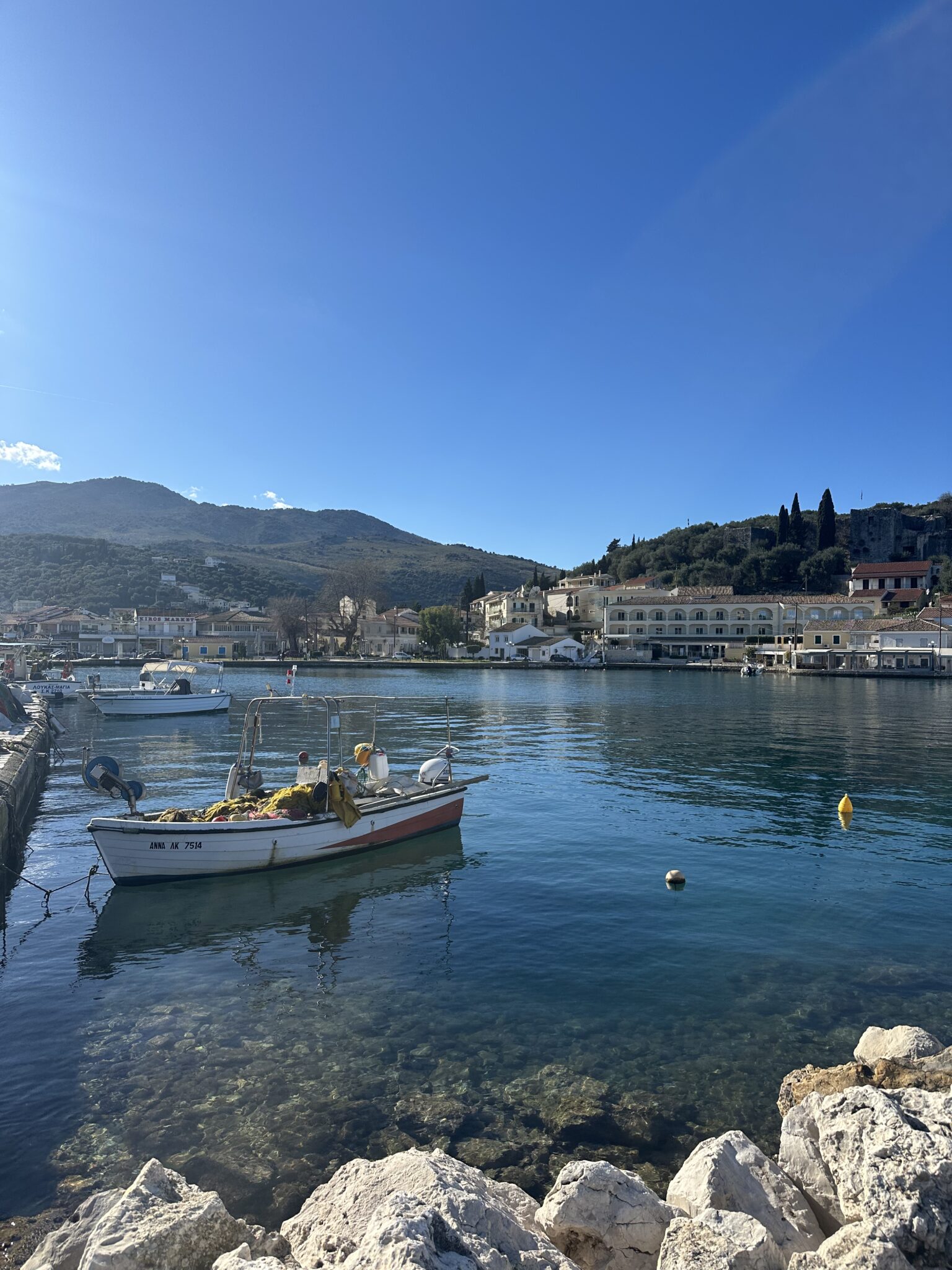
North-East Corfu remains one of the island’s most stable and sought-after real-estate markets, yet it is also one of the most misunderstood — particularly by international buyers who rely heavily on online listings. While portals present land as a simple commodity, the reality on the ground is far more nuanced. Successful land acquisition in this region depends less on availability and more on understanding a set of local, legal, and technical realities that rarely appear in public descriptions.
One of the most common misconceptions is the idea that land is either “buildable” or “not buildable.” In practice, buildability exists on a spectrum. Two plots of identical size and location can differ dramatically in what can actually be constructed, how long approvals will take, and what the final cost will be. Zoning status, forest designation, settlement boundaries (oikismos), and existing structures all influence what is realistically achievable. These distinctions are often oversimplified online, which is why preliminary assumptions frequently collapse during due diligence.
Access is another critical factor that determines whether a land transaction moves forward or quietly fails. In Corfu, legal buildability requires verified access either directly from a public road or through a formally registered right-of-way. Informal paths, historic use, or verbal agreements — even if accepted locally — are insufficient for permitting purposes. Many buyers discover access issues only after committing time and resources, resulting in delays or abandoned purchases. Proper verification from the outset eliminates this risk entirely.
Terrain plays an equally important role. Much of North-East Corfu is naturally steep, and while sloping land is common, it must be evaluated realistically. Steeper plots generally involve higher construction and engineering costs, more complex foundations, and careful architectural planning. However, elevation also delivers what many buyers ultimately seek: uninterrupted views, privacy, and long-term desirability. The key is not avoiding slope, but understanding its implications and ensuring the price and project scope reflect the reality of the land.
Plots located within recognised settlements (oikismos) are particularly rare and valuable in this part of the island. These areas often allow higher building allowances, smoother permitting procedures, and greater flexibility compared to land outside the plan. In exceptional cases, settlement plots may support multiple residences or the renovation of an existing structure alongside new construction. Because supply is extremely limited, such opportunities are typically exchanged discreetly and rarely remain available for long.
This explains why much of the most viable land in North-East Corfu never reaches public portals. Ownership in this region is concentrated, supply is finite, and serious buyers are often known through local networks. As a result, many transactions occur quietly, shared selectively and only after buyer intent is established. Online listings represent only a portion of the true market, often excluding the most strategic opportunities.
In North-East Corfu, land acquisition is not about volume or speed. It is a precision process that rewards clarity, local knowledge, and patience. Buyers who prioritise verified access, realistic construction planning, and legal transparency place themselves in a far stronger position — both during acquisition and in the long term.
The difference between a successful land purchase and a stalled project is rarely the land itself. It is the information behind it.
—
Eterna Collection
Local Real Estate & Land Advisory
North-East Corfu