The top ten results for “things to do in Corfu” all recommend the same six experiences: the Achilleion Palace, Old Fortress, Mon Repos, a boat trip to Paxos, a donkey ride somewhere, and a wine tour that ends at a shop. These are fine. They are also the things you would find in any Corfu guidebook printed between 2005 and today.
This list is different. It comes from a decade of living on the north-east coast, from conversations with the farmers, fishermen, taverna owners, and long-term foreign residents who make up the actual texture of life here. Some of these things are obscure. Some are obvious but badly described everywhere else. All of them are worth your time.
1. Take a Boat from Agios Stefanos (Sinies) to Erimitis and Back
Most day-trip boats from Kassiopi go south — to Paleokastritsa or the Albanian coast. The better trip goes west. Hire a small motorboat or a skippered vessel from Agios Stefanos Sinies and head around the cape to Erimitis.
Erimitis is a Natura 2000 protected cove backed by wild olive woodland. There is no road to it. There is no taverna. There are usually no people. The cliffs above it are dramatic, the water is exceptionally clear, and you will almost certainly have it to yourself before noon. Return via Kerasia Bay for a second swim, then back to Kassiopi harbour for lunch.
Half-day skippered boat from Kassiopi: roughly €200–280 depending on boat and season. Worth every cent.
2. Walk Old Perithia Before Lunch
Old Perithia is the only fully intact Venetian mountain village in Corfu. It sits at 600 metres on the southern slopes of Mount Pantokrator, and it was more or less abandoned when the population moved down to the coast in the early 20th century. The stone houses, the churches, the alleys between them — all intact and unrestored in the best possible way.
The village has been half-discovered: there are now three or four tavernas open in summer, and there is a car park. But arrive before 10am and you will have the place to yourself. The light in the morning is extraordinary. The silence is complete. Two of the tavernas are excellent.
Drive time from Kassiopi: 25 minutes. Return via the Pantokrator summit road if the weather is clear — the view from the top takes in Albania, the Greek mainland, and on the best days, the Italian coast.
3. Sunrise on Mount Pantokrator
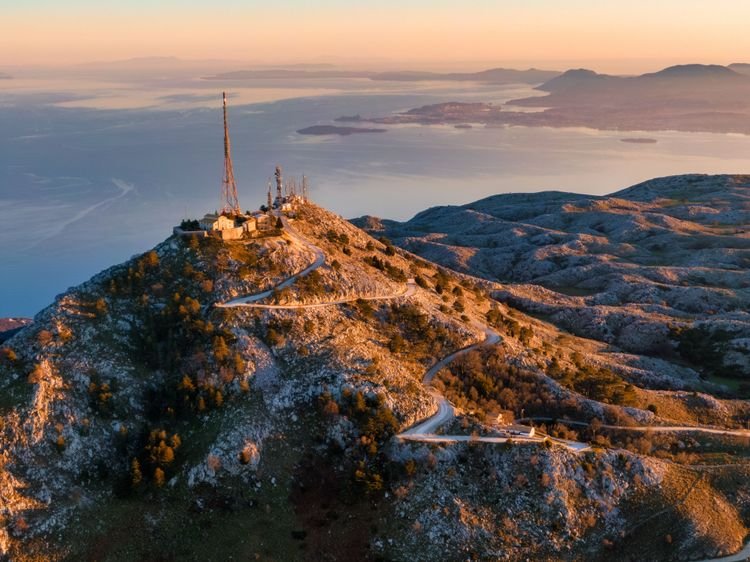
Pantokrator is the highest point on Corfu at 911 metres. There is a road to within 200 metres of the summit. There is a Byzantine monastery at the top, built in the 14th century and still functioning.
The sunrise from the summit is something else entirely. You are above the cloud layer when there is one. The Albanian mountains across the channel catch the first light before Corfu does, which means you watch dawn arrive from east to west in a way that makes the island make more geographical sense.
Leave Kassiopi at 05:15 in summer. Bring coffee. The monastery does not open until 08:00 but the summit is always accessible.
4. Eat at Klimataria in Corfu Town
Not a secret exactly, but wildly underreported in the English-language press. Klimataria is a no-menu taverna in the old town of Corfu that has been operating since 1940. You sit down. Someone comes over and tells you what is good today. You eat it.
The food is Corfiot, not Greek-for-tourists. Sofrito (veal in white wine and garlic) is the dish the island is known for and Klimataria does it better than anywhere I have found. The wine comes from an unmarked bottle. The bill is fair.
Booking essential in summer. Walk-in works in spring and autumn.
5. Swim at Yialiskari
Yialiskari is the best beach on the north-east coast that nobody talks about. It sits between Nissaki and Kassiopi, accessed via a side road that almost nobody takes because there is no sign pointing to it. The beach is small — 60 metres of shingle — the water is exceptional, and on most mornings in May and September you will have it more or less to yourself.
I have written about it in the beaches guide. The short version: go before 10am, park at the top, walk down. In August it fills; in May you will wonder why you ever paid for a sunbed anywhere.
6. Visit the British Cemetery in Corfu Town
This is one of the strangest and most moving places on the island and almost no one visits it. The British Cemetery in Corfu Town dates to the British Protectorate (1815–1864) and contains graves ranging from Georgian-era officers to children who died of fever in the 1840s, 20th-century sailors, and contemporary expats who chose Corfu as their final home.
The cemetery is maintained and freely accessible. It is set back from the main streets of the town in a quiet garden. The inscriptions are in English, which adds to the strange intimacy. Allow an hour.
7. Have Lunch at One of the Three Agni Tavernas — All Three, Different Visits
Agni is a cove accessible by boat from Kalami (10 minutes) or on foot via the coastal path from Kalami (35 minutes). It has three tavernas — Toula’s, Agni Taverna, and Nikolas — all of which serve excellent food and all of which have been there long enough to have regulars who book the same table every summer for decades.
The protocol is simple: each has a slightly different character. Toula’s is the most atmospheric, with tables closest to the water. Nikolas is the oldest and the most local. Agni Taverna is the most reliably consistent. Try all three over a week if you can.
Lawrence Durrell sailed here from Kalami in the 1930s. The tavernas are newer, but the cove is the same.
8. Drive the Sinies Road at Dusk
There is a road that runs along the high ridge above Agios Stefanos Sinies, Avlaki, and down into Kassiopi. It is narrow, potholed, and almost unused. In the evening, with the sun dropping behind Pantokrator and the Albanian coast glowing across the channel, this is one of the most beautiful drives in the Mediterranean.
Allow 40 minutes. Do not rush it. Stop twice — once above Avlaki and once above Sinies. Bring no agenda.
9. Taste Kumquats in Nymphes
Corfu is the only place in Europe where kumquats are grown commercially. The main producer is based in the village of Nymphes, inland from Corfu Town. The kumquat liqueur is sold everywhere on the island, but tasting it at the source is a different experience — the versions sold in tourist shops have often been sweetened beyond recognition.
The Nymphes distillery runs tastings and tours. The preserved kumquats in syrup are the product to take home.
10. Watch the Sunday Produce Market in Acharavi
Acharavi is the main town on the north coast and it holds a weekly Sunday produce market that is as close as Corfu gets to a genuinely local agricultural market rather than a tourist market. Honey, olive oil, cheese, preserved vegetables, local wine, herbs.
Go before 10am. Most of the serious sellers are packing up by noon. If you are staying in Kassiopi, it is 15 minutes’ drive.
11. Take the Achilleion Before 09:30
The Achilleion Palace, built in 1890 by Empress Elisabeth of Austria (Sissi) and later owned by Kaiser Wilhelm II, is the most famous building on Corfu and therefore the most crowded between 10am and 4pm in summer.
But the gardens open early, the ticket office opens at 08:00, and the 40 minutes before the first tour buses arrive are qualitatively different from what comes after. The Achilles statue, the terraced gardens with their view to Pontikonissi and the sea, the faded grandeur of the palace interiors — none of this is improved by sharing it with 200 other people.
Go early. Spend 45 minutes. Have breakfast in the village of Gastouri on the way back.
12. Hire a Kayak from Kassiopi and Paddle to the Roman Ruins
The ruins of a Roman temple to Jupiter Cassius are visible underwater in the bay off Kassiopi harbour. They are not dramatic — the site was largely destroyed in the Byzantine period and what remains is scattered cut stone — but paddling out to them on a flat morning and looking down through clear water at 2,000-year-old masonry is a strange and specific pleasure.
Kayaks for hire from the beach near Kassiopi harbour. The ruins are roughly 300 metres offshore in about 3 metres of water. Best visibility: morning, before the afternoon breeze arrives.
13. Take the Off-Season Olive Harvest Experience
In November, the olive harvest begins across Corfu. The island has over four million olive trees — more per square kilometre than almost anywhere in Greece — and the harvest is done by hand, with long rakes dragging the olives down onto nets spread beneath the trees.
Several local families offer a half-day harvest experience in late October or November. You work a section of grove, take the olives to the local mill, and leave with a bottle of the first-press oil. The colour of the oil at this stage — cloudy green-gold, intensely grassy — is unlike anything sold in a supermarket.
This is not a tourist activity with a certificate at the end. It is agricultural work with strangers who are harvesting their family’s income. It is better for that.
14. Walk the Durrell Trail from Kalami to Agni to Kouloura
This is the walk that ties together the three bays that matter most on the north-east coast and the literary history that connects them.
Start at Kalami — the White House where Lawrence Durrell lived in 1936 and wrote Prospero’s Cell. Follow the coastal path south to Agni (35 minutes) for lunch at one of the three tavernas. Continue to Kouloura (another 20 minutes), the smallest and most protected harbour on the coast, where the Durrell family took their boat.
The whole walk is 5 kilometres. The path is rocky in places and requires decent shoes. The views across to Albania are continuous. The return can be done along the inland road or by water taxi from Kouloura back to Kalami.
This is the walk I take every visiting buyer who has time for it. Almost all of them find it clarifying.
A Note on Timing
Most of these things are better in May, early June, or September than in July or August. The island is calmer, the professionals are still paying attention (the taverna owner who cooked his first 200 covers in June is a different proposition from the one cooking his 2,000th in August), and you will occasionally have a cove, a mountain summit, or a medieval village entirely to yourself.
If you are thinking about property in north-east Corfu, a viewing trip in May gives you the coast as residents live it. A trip in August gives you the coast as tourists experience it. Both are real versions of the island. They are not the same place.
If You Are Combining This Trip With a Property Viewing
Several of the experiences on this list — the Agni walk, the boat to Erimitis and Kerasia, the Yialiskari swim — are also natural ways to understand the geography of the north-east coast from a buyer’s perspective. Which bay you want to look at from your terrace every morning. How long the beach is when you walk there rather than drive. Whether you want a village with a year-round taverna ten minutes away or 25 minutes.
We arrange most viewing trips to include at least one of these. It is not sightseeing. It is understanding where you are thinking of buying.
Get in touch if you are planning a trip.
Marcos is the founder of Eterna Collection, a boutique real estate agency working exclusively in North-East Corfu.